Dangerous Goods Air Freight
DG air freight for dangerous goods from China: lithium batteries (UN3480/UN3481), chemicals and flammable liquids shipped under full IATA DGR compliance — MSDS, UN38.3 and DG appraisal reports handled by our certified DG team.
Service Overview
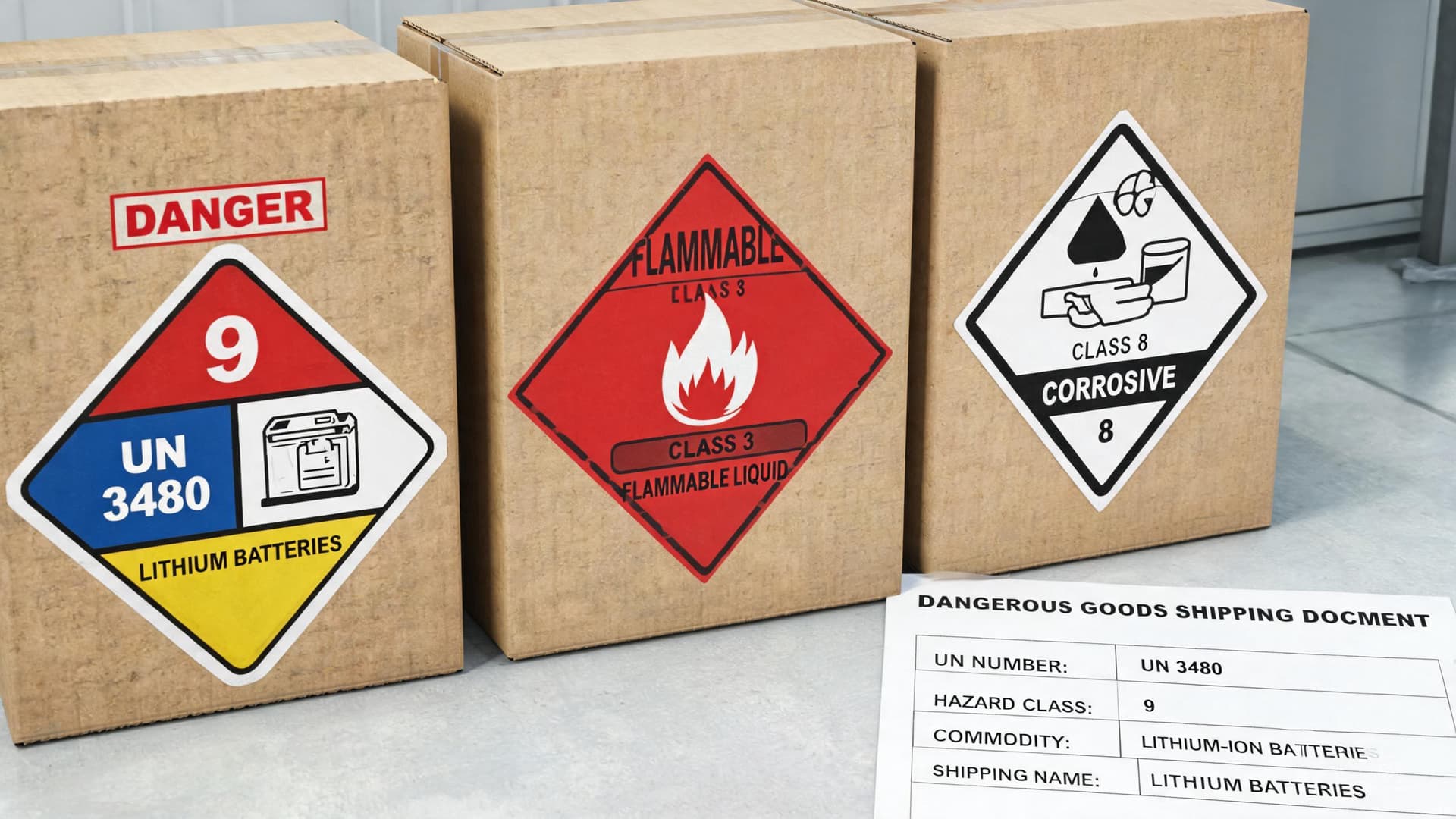
Dangerous goods (DG) air freight is our dedicated channel for cargo that ordinary air services cannot accept: lithium batteries, chemicals, flammable liquids and other regulated goods. De Zong Logistics holds full dangerous goods handling qualifications with a specialist DG operations team, and every shipment moves under the IATA Dangerous Goods Regulations — classified, packed, declared and loaded correctly from booking to arrival.
Common DG cargo types
- Lithium batteries: pure batteries, devices with batteries, power banks (UN3480/UN3481, Class 9)
- Chemicals: paints, adhesives, reagents and intermediates (classed per MSDS)
- Liquids: cosmetics, cleaning agents, industrial liquids (mostly Class 3 flammables)
- Others: magnetized material, aerosols, disinfection products
Compliance is everything in DG shipping: cargo needs its MSDS, UN38.3 test report (lithium batteries) or air transport appraisal report (chemicals), plus the correct packing instruction and labels for its class. Airlines cap how much DG each flight accepts, so space must be booked and confirmed in advance. We review documents and packaging before booking — cargo never gets rejected at the terminal. For bulk DG or peak-season space shortages, an air charter is worth evaluating.
Key Features
Service Scope
Accepted classes: Class 9 lithium batteries (pure and contained-in-equipment), Class 3 flammable liquids, Class 8 corrosives, Class 2 gases and Class 4/5/6 chemicals (confirmed per MSDS).
Destinations: major airports worldwide; certain airports and carriers restrict specific DG classes — confirmed at booking.
Documents: MSDS, UN38.3 report (lithium batteries), air transport appraisal report (chemicals), Shipper's Declaration for Dangerous Goods (DGD).
Packing: UN-specification packaging per IATA packing instructions (PI 965/966/967 etc.) with proper labels.
Timing
Reference transit times:
- Direct flights: 5-7 days
- Transit flights: 7-10 days
DG requires advance booking against airline acceptance limits — plan 3-5 days ahead, longer during peak battery-shipping seasons.
Pricing
Quoted by DG class and cargo profile:
- Class 9 lithium batteries: DG surcharge over general cargo rates
- Class 3/8 chemicals: quoted by flight acceptance and packing requirements
- Includes: DG handling, declaration and segregated storage fees
Send the MSDS/UN38.3 and destination airport for a detailed quote within 24 hours.
Process
1. DG details: provide MSDS/UN38.3, confirm class and packaging
2. Documentation: we assist with appraisal reports and complete filings
3. Booking: space confirmed against airline acceptance limits
4. DG intake: cargo received into segregated DG warehousing
5. Declaration & loading: DGD filed, loaded per IATA DGR
6. Arrival & clearance: import clearance at destination, delivery arranged
FAQ
Q: Devices with batteries vs. pure batteries — what's the difference?
A: Equipment containing batteries (phones, laptops) moves under PI 967 with wide acceptance. Pure batteries (UN3480) face stricter rules — PI 965, state of charge ≤30% — with only some flights accepting them, at higher rates.
Q: Can I ship without an MSDS?
A: No. The MSDS is how carriers determine whether cargo is dangerous and how it must be handled. Unidentified chemicals can be sampled for composition testing first, then an MSDS issued.
Q: What is UN38.3 and is it mandatory?
A: UN38.3 is the lithium battery safety test report — mandatory for air transport of any lithium battery. It proves the battery passed short-circuit, crush and overcharge testing. Without it, batteries cannot fly.
Q: Can cosmetics and perfume go by air?
A: Perfume contains alcohol and ships as Class 3 dangerous goods; alcohol-free cosmetics confirmed as non-DG by MSDS can move on general air freight.
Q: How much more does DG air freight cost?
A: DG surcharges and handling fees apply on top of general cargo rates — Class 9 batteries typically cost noticeably more. Send the MSDS for an exact quote by lane and class.
Q: Why does DG need advance booking?
A: Airlines limit the categories and quantities of dangerous goods per flight, and some airports refuse specific classes entirely. Space must be applied for and confirmed with the carrier before booking.
Get Quote
Request QuoteContact Us
Interested in Dangerous Goods Air Freight?
Fill in the form below and we will send you a quote soon